

All About MTSS Boot Camp
IL MTSS Network Coaches Kari Harris and Kim Spiker will be leading our upcoming MTSS Boot Camp sessions in Naperville (June 24-25) and Decatur (July 24-25). We sat down with them to learn more about what to expect at MTSS Boot Camp: Building from the Ground Up. Keep reading to learn about this unique professional development opportunity!
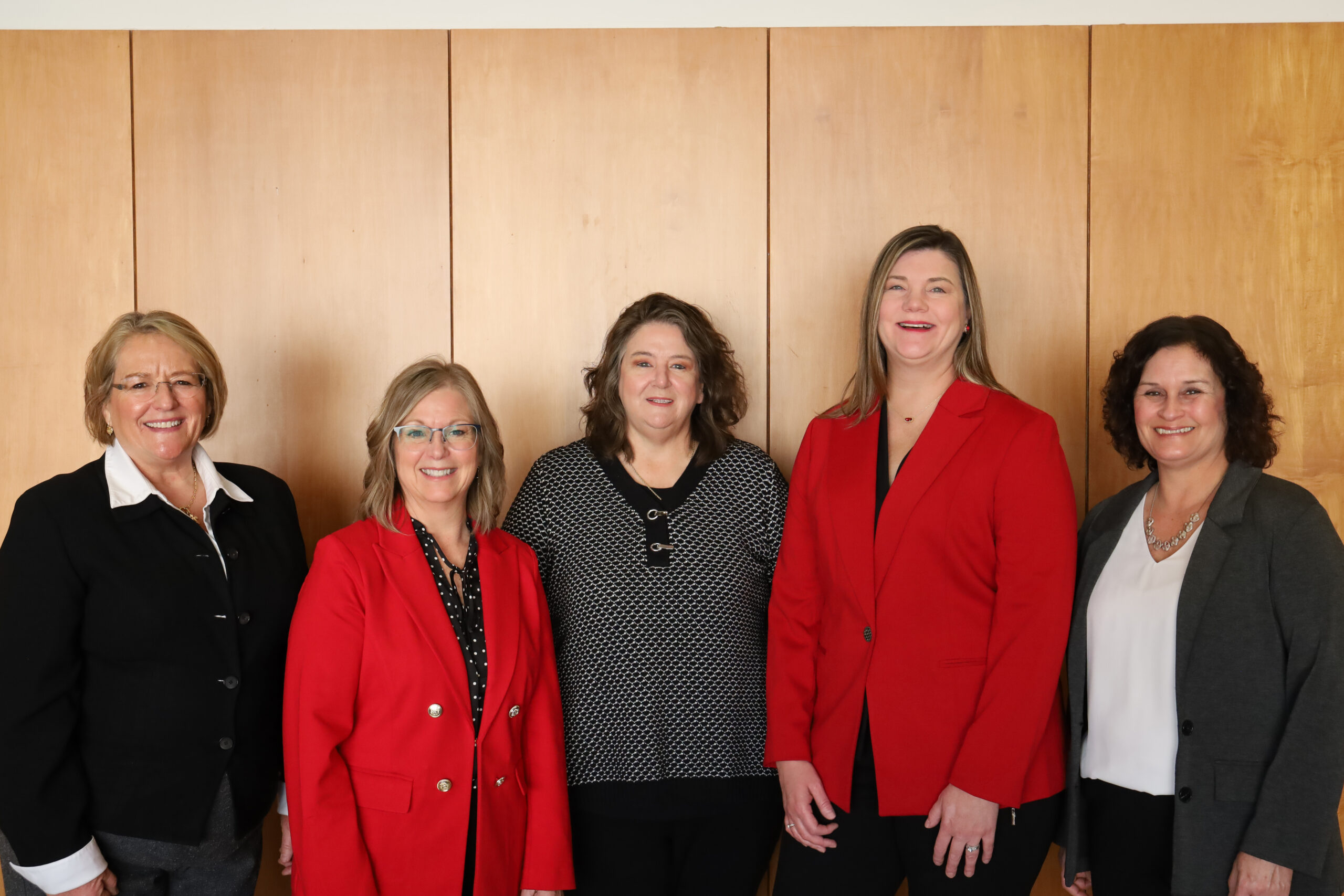
Kim (far right) and Kari (second from right) are joining forces to create a revamped Boot Camp for all MTSS practitioners.
Can you tell us a little bit about the history of the MTSS Boot Camp?
Kim: Boot Camp lived in my brain for several years before we actually delivered it the first time last August! We’ve officially done the Boot Camp twice – once where educators from multiple districts registered and came to us, and once where we went on location at a school that wanted to offer the Boot Camp to their entire staff.
I’m curious – how did the Boot Camp idea start living in your brain? What was the need you saw for it?
Kim: When we work with districts, we join them in many different parts of their MTSS journey. At the time, we were seeing a lot of schools that were sort of stuck in the beginning stages. They didn’t have time available to onboard their staff every year as deeply as they wanted to around MTSS because they were also doing onboarding for many other things. We thought it would be beneficial to give them dedicated time away from campus to dive deeply into MTSS. The idea was to create a deep learning experience in a concentrated time period, alongside other people in the same situation.
Kari – can you say a little bit about how you got involved and how you two are working together on the Boot Camp now?
Kari: Absolutely. Boot Camp was well-received last year, and I’m excited to get involved with it this year. As we expand it across the state with more locations, I was asked to co-facilitate sessions in Decatur and Naperville with Kim. Based on feedback from past participants, we are working together to revise content and flow to ensure that Boot Camp is a meaningful experience for all attendees who may work with PreK through high school students. The Boot Camp is a great opportunity for educators to get off campus, outside of the traditional school day, so they can focus 100 percent, uninterrupted, on MTSS.
What should participants expect the days to look like?
Kari: We’ll have a lot of opportunities for learning best practices, receiving some resources, and then having time to process that on your own with the people at your table. If you’re there with your team, you’ll have an opportunity to discuss deeply with them. Or you can sit with others who are not from your district and get their perspectives and observations. That can be really helpful, too, hearing what others are doing! When you think about the schools across the state, we have some very large districts with more than ten buildings and other single-building districts. Teams, practices and policies look very different between small and large districts, urban and rural districts, so it’s useful to connect with other districts that are like yours.
Kim: The format is we start with a little bit about the history of MTSS and the research, especially some of the mindsets for change theory that will need to be in place. We offer an overview – the 10,000-foot view to show the whole picture of MTSS. Because what we’ve found is that people often know their own role well, but they don’t know as much about all the other components of the MTSS.
So we start with the big picture and then dive down through the tiers and talk about the process all the way from the benchmark screening in the fall through if a student ends up needing Tier 3 supports. We talk about what that looks like – all the activities that happen at each tier.
Then we include all the perspectives in the room depending on the different roles people have. If someone is an administrator, we talk about – what does the administrator do day to day? How do they look at data and decide who needs support and where they need to make changes to the system? That’s very different from the perspective of a teacher, an interventionist or a social worker. We’ll take the pulse of who’s in the room and then target the conversation, the activities and the examples.
Who would benefit from the Boot Camp?
Kim: Anybody who engages with students, whether in academic, behavioral or support roles. Whether we’re talking about academics, behavior, healthy food, recess, the schedule or family engagement, all those things are really about supporting students, so there could be value to people working in any of those areas.
When we visited one district and provided the training at their location, they had people from outside the classroom attend, including somebody from the cafeteria, a secretary and a custodian. It was really all-hands-on-deck! I think all those people did take something away and were much more aware of what goes into teaching and supporting students after the training.
Kari: I’d like to add that MTSS isn’t only for students who are struggling or underperforming. It’s not only for our students who are receiving our Tier 2 and Tier 3 supports. MTSS is for all students, and it’s about setting up the systems to make it easier for all students to be successful in school.
So, a custodian has knowledge to offer – they might say, I can see a way that hall movement can be smoother, or bathroom behavior could be improved with this change. Or maybe we could restructure the cafeteria to promote better behavior. The systems, practices and environments throughout the school day are all part of MTSS and can all affect students’ social, emotional, behavioral and academic success.
Wow! So the way you have the lunchroom set up physically, or the timing of bringing kids to and from lunch or recess is a system that can affect how students are likely to behave and manage their emotions?
Kim: Yes! One of the key points is those transitions between academic time and non-academic time – that flow back and forth. For example, how many minutes are we wasting instructionally because the kids are coming back too wound up from recess? What can we do about our recess procedures or our lunch procedures to get students ready to learn? How much instructional time can we save? Even if it’s only a few minutes a day, that’s going to add up throughout the week, the month and the year.
Is the Boot Camp primarily for people new to MTSS, or can experienced practitioners benefit, too?
Kim: This would benefit folks who are beginners to advanced, in any role that supports students on some level.
The first time we did the Boot Camp, we targeted new staff – either staff who were brand new or staff new to an MTSS role. But what we saw was that people came who were at all different levels, and it worked really well to have them all in the room together. People brought teams they were revamping or improving. They brought folks who were experienced at MTSS but had moved to a new building. They came if they wanted to refresh their skills.
So this time, we’re really embracing that diversity of levels! No matter where you are on your MTSS journey, we’ll meet you there. Since Kari and I will both be there, we’re ready to tailor the activities and discussion to what people need even if they’re not new to MTSS.
Kari: Just like Kim said earlier, the Boot Camp is a great place to have an intensive two-day workshop that covers all the domains of MTSS. It’s great if you’re new to MTSS, but it also provides an opportunity if you currently have something in place, to basically audit it, see best practices and align what you’re doing.
Is there anything else you want folks to know about those two in-person Boot Camp days?
Kim: I’d like people to know that participants tend to get valuable skills and tools they can apply right away. The last time we offered Boot Camp, it was two days in early August. We had one team who was there, and while they were attending Boot Camp the rest of their staff was back at school preparing for the new school year. The team at Boot Camp was sending pictures of the slides and texts back to people on campus so that when the teachers came in Monday, the teams would be able to incorporate what they learned right away. It was clear that they were finding valuable, on the ground, ready-to-use ideas.
That’s one of the reasons we scheduled Boot Camp earlier this year, in June and July. That gives people more time to put into practice what they’ve learned for the following school year. Participants might decide that schedule or personnel changes are needed in their building, and those changes take time to plan and implement.
That’s really interesting! One of the things I’ve heard from interviewing district administrators is that it takes many years to fully implement an effective MTSS.
Kim: It’s not unusual for the process to take about five years. I remember saying that in Boot Camp and the participants all had horrified looks on their faces! It’s scary to think that the process can take that long. But I tell them, “Just breathe. Pick one thing and do it well. Then move on and pick the next thing. You don’t have to complete everything to start seeing positive results.
I see a virtual follow up with the MTSS coaches is included. Can you say more about how that works?
Kari: The follow up sessions are there as a resource for participants to use after the two in-person Boot Camp days to get whatever feedback or coaching they need. When you come to the Boot Camp, you’re getting a lot of information in two days, and you’re going to want to go back and immediately start enacting some things. But there will, of course, be questions and barriers to work around once you get back to the realities of your own district. You’re going to come up with additional questions that you’ll want to bounce off somebody else. These virtual follow up sessions are your chance to ask an MTSS expert, connect with other schools that are doing similar work and get advice that applies to your particular situation.
It’s also a great opportunity to connect on those next steps a bit further down the road. I hope everyone will walk away from the Boot Camp with a few ideas they want to implement right away. But there will also be ideas that don’t fit into your immediate plans but will happen a little later. The follow up sessions will help people prepare for those next steps several months or years down the road.
The MTSS Boot Camp in Naperville is happening just a few days after your joint NIU Engaged Learning Conference. For folks who are planning out their summer PD, can you say a little bit about each of these opportunities?
Kim: The Engaged Learning Conference is jointly presented with NIU STEAM, so it offers short break-out sessions focused on both STEAM learning and MTSS. It’s an exploration of hot topics – a variety of different topics – but they’re not necessarily all connected to one another. The conference can be a great way to get inspired, meet folks from other districts and get some new ideas.
The Boot Camp, on the other hand, is a sequential and deliberate explanation of the full MTSS system. So there’s value in both the conference and the Boot Camp, but for someone new to MTSS or wanting to build their MTSS from the ground up, the Boot Camp is a great starting place to create a strong foundation.
Kari: Yes – the conference is a kind of a la carte experience! You get to choose something of interest and get a little taste of it, maybe get one lesson or practice to bring back to your school, or one idea to pursue further. The Boot Camp is like a full six-course meal – all planned seamlessly from start to finish so each course is building on the one that came before with a very specific purpose in mind.
We hope people will register for one or both, depending on their needs!
Learn more and find registration links on our events page.
