

MTSS, Behavior and Mental Health Supports
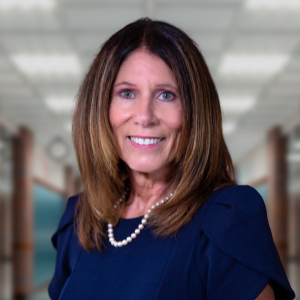
An interview with Kim West, Director of Student Services, Lyons School District 103
Can you tell us about your experience working with the Illinois MTSS Network and your district’s MTSS journey and approach?
I came to the district five years ago when they were still writing the MTSS manual. As director of student services, I was tasked with continuing that plan and working with the Illinois MTSS Network. I don’t think we’d be where we are today without our MTSS Network coach, Ruth Poage Gaines. It’s very easy in a school district to start something and stop, start, stop, because there are so many priorities to juggle, and things get in the way. We were lucky that Ruth kept us on the road where we needed to be. All along, Ruth and the MTSS Network knew our staff and what our staff capacity could be, so they were able to help us stay on the road to progress and maintain integrity towards the MTSS program.
Based on your experience, do you have any advice for other districts who might be in those early stages of developing their MTSS?
I think you have to make sure that you start with intention. What’s the why behind your MTSS? You have to make sure all your staff, your parents, your school board understand that purpose and intention. That takes time, and you also have to give time for staff to be able to work with your online program. We use EmbraceMTSS. To me, it’s very easy, but that’s my specialization. When we want classroom teachers in Tier 2 to enter things in the system, there has to be professional development, support at grade-level team meetings, maybe a cheat sheet people can use to help them with the online system.
So my main advice is, take your time – you can’t rush this. It took us five years to build this system, to address academic concerns and then behavioral concerns. And this year, it’s really paying off. We don’t have the problems we did in the past because we took the time to roll this out slowly.
I love your advice to focus on the intention behind the system. What’s the “why” for you?
The why for me is that MTSS supports students academically, behavioral and socially. It’s that trifecta, the whole child. A lot of times, schools will just focus on the academic portion, but unless you manage behaviors you can’t teach the child. In fact, you have to understand the “why” behind students’ behaviors. I like to look at behaviors as a form of communication – the child is trying to tell me something, I just don’t know what it is yet. So we really need to understand: why is the behavior occurring? What is the need that is unmet?
We’re not doing this just because of state mandates or some outside motivation. We’re implementing an MTSS because that’s what’s best for the whole student. If you don’t address mental health, behavior and social-emotional learning, then a student can’t learn effectively – because it’s all connected.
How does social-emotional learning and mental health fit into your MTSS?
MTSS matters because it supports students academically, behavioral and socially – supporting the whole child. So in our grade-level team meetings, we focus on a different topic each week. Reading one week, math the next week, social-emotional/behavior the next week, and then the fourth week the principal will choose a topic based on needs they’re seeing. We’re always continually looking at the data in each area and problem solving based on that data.
I heard that your district received a mental health grant, and you have a psychologist in every building. Can you share a bit more about what mental health concerns are affecting schools now, and why it’s so helpful to have that mental health support?
We see a lot of school refusal due to anxiety. We don’t see as much suicidal ideation as we did a few years ago, but that’s still a concern. I think part of the reason we’re seeing a decrease is because we’re concentrating on supporting all students and addressing mental health concerns before they rise to that level. We have forms that the students fill out, and there are some markers we look at to determine early if a student needs additional mental health support, especially during middle school, which for many students is the hardest time socially and emotionally.
We’ve built partnerships with external organizations, such as Lyons Township Mental Health, who come in and provide additional support to supplement our social workers.
We also communicate with parents about mental health concerns, anxiety and school refusal. With school shootings in the news so often, many parents are fearful and not sure what to do if their child is refusing to go to school. We’re focused on supporting mental health in the school to help students and families feel safe and feel good about going to school.
Is there anything else you’d like to add about how these mental health supports fit into an MTSS?
I’m a behavioral expert, so for me behavior and social-emotional concerns always come first because they affect everything. Students often come into school with trauma and mental health issues, so I don’t think you can have an effective MTSS unless you have a solid mental health support system connected to that. Mental health affects how a student performs in the classroom, their academic achievement. It affects how a student interacts with other students. It affects their behaviors throughout the school day. So we have to start from a solid base of students feeling safe and connected at school.
Our PBIS is in place at Tier 1, so no kid is left out. And we’ve transformed the culture of the district, so staff are all on the same page about having high expectations for student behavior and rewarding positive behaviors. With that as the foundation, we’ve made progress. Our rates of suicidal ideation are down, and our rates of academic success are up. It takes time, but little by little we’re seeing real results because we’re implementing the system consistently with fidelity across all staff. And we could not have done this without the help of Ruth and the Illinois MTSS Network!
Can you tell me more about your district’s PBIS?
It stands for positive behavioral intervention, and it’s all about making expectations clear, focusing on how you want kids to act, and focusing on when they do something right, rather than what they might be doing wrong. It’s about communicating expectations clearly to all students and their families, in English and in Spanish. Because how can you expect students to follow expectations if they’re unclear on what they are? It’s about presenting a welcoming message to all families and making sure everyone is connected and presenting a united front to help the student.
Good communication is central, and it goes both ways. We need to be connecting and communicating with parents regularly, letting them know early of any concerns, asking for their feedback and working together to solve any problems that arise.
We’re seeing improvements, which is exciting. We’re making progress one conversation at a time.
Is there anything else you’d like to share that we haven’t asked about?
Absolutely. Having a superintendent like Kris Rivera, who is deeply invested in and knowledgeable about our MTSS (Multi-Tiered System of Supports) framework, makes a tremendous difference. The fact that he played a key role in building the processes himself demonstrates a high level of commitment and provides a strong foundation for the system. His involvement also boosts staff confidence – there’s something incredibly reassuring about knowing that leadership truly understands the work on the ground level.
One important lesson I’ve learned is the value of solidifying Tier 1 before focusing too heavily on Tier 2 and Tier 3 interventions. We’ve worked hard to strengthen our Tier 1 supports and have become much more effective at identifying when an issue is rooted there – often making it easier to address.
Another key piece is building a culture of support rather than judgment. Change takes time, and people need to feel safe and encouraged during the process. When I meet with a teacher, I often say, “Take a deep breath. We don’t expect perfection. As long as we’re moving in the right direction, we’re good.” That mindset creates space for growth, reflection and, ultimately, lasting progress.
