

Meet Kim Spiker, Network Capacity Coach
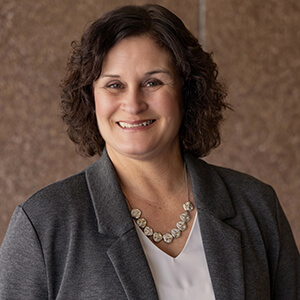
Kim Spiker is proud to have served students and educators in Arizona and Illinois for over thirty years. Kim has ten years’ experience providing coaching and professional learning on MTSS across two iterations of the Illinois MTSS Network.
Kim earned a bachelor’s degree in Liberal Studies from California State University at San Marcos. She went on to earn graduate degrees in Educational Leadership from Eastern Illinois University and Curriculum and Instruction from Western Governors University. Kim holds a Professional Educator’s License with elementary and administrative endorsements and is also trained in Illinois teacher evaluation. She has served on the IL ASCD board and ISBE’s Dyslexia Task Force.
We spoke with Kim to learn more about her background and her approach to MTSS.
Can you share a bit about your background, and how you came to be a Network Capacity Coach?
I spent 22 years, mostly in elementary schools, as a classroom teacher, Title 1 teacher and administrator. I loved the moments when my students learned something they had been struggling with. I liked knowing I had something to do with easing their struggle. When an opportunity came up for me to participate in the Illinois RtI Network (an earlier iteration of the MTSS Network), as an external school coach, I embraced it. During that year, I saw the Network from the inside and witnessed the power RtI/MTSS could have for staff and students. At the end of that year, I was ready for a change and was fortunate to be asked to join the Network as a coach. Now, I go into schools and help them implement or refresh their MTSS to better support students and staff. It’s an interesting circle to see the work from both sides.
Why do you support the use of MTSS in schools?
I support MTSS in schools because I have seen, time and time again, how it can change the trajectory of students and schools. I have seen incredible shifts in mindset from administrators and adults through this work which enables them to engage in difficult system change. I’ve seen first-hand how students’ lives have been altered due to the support they receive through high quality instruction and tiered intervention. MTSS is effective because the system, when implemented well, gives schools a framework for all they do to improve outcomes. Using multiple measures of data to make decisions enables the best use of time and resources which lightens the lift for everyone.
What’s your top advice for schools working to implement or improve MTSS?
My top advice for those working to implement or improve their MTSS is to begin with a self-assessment of where you are right now. Knowing how your system is performing on the big components of MTSS will identify areas to celebrate and areas to grow. A second piece of advice, which goes along with the first, is to pick 2-3 areas to work on and stay focused. It’s so easy to get distracted by new initiatives or new needs. Research tells us it takes 3-5 years to see the benefit of a new innovation, like MTSS, so stay the course. Once you meet the first set of goals, reassess and select a few more. With patience and focus, you will see amazing results.
What does “collective efficacy” mean to you, and why it is important for schools?
Collective efficacy is such a powerful lever in schools! I first became aware of the idea years ago after reading some of John Hattie’s work. I’ve seen many examples of the stagnation caused by a lack of self-efficacy among school and district staff. Times when an entire staff or different teams believe they don’t have the skills or resources to make impactful change for students. Hattie, and others, propose that the number one mindset we must have to see change in our schools is that we believe we can make a difference. It seems like such a simple thing, but there are big challenges facing schools today. Administrators, teachers, staff, students and families must first believe they can make the changes to see improved outcomes. I can’t think of any example where impactful change was made when those involved didn’t first believe they would accomplish their goals.
Is there anything else you’d like to share?
Implementing MTSS well is challenging. I encourage people to stay focused and remember there are many nuances in every context that will need to be addressed. After a great conversation with Joyce Debrah and IL MTSS Network Director, Lori Hensold, I’ve recently started thinking about MTSS as an iceberg. The part on top of the water holds the technical aspects we can read about in MTSS books. The much larger part, below the water, contains the context specific adaptive changes that will need to be made for MTSS to be effectively implemented in each school/district situation. Contextualizing the adaptive aspects of implementation is something IL MTSS Network coaches do very well.
