

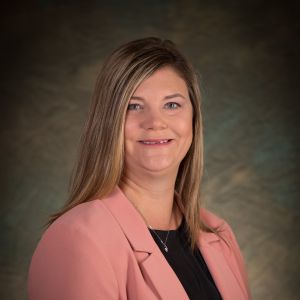
Get to know Kari Harris, IL MTSS-N Network Capacity Coach
Kari Harris is a network capacity coach located in the northern region of Illinois. She has educational experience as a classroom teacher, reading specialist, literacy coach and instructional coach.
Kari is also an adjunct faculty member of the College of Education at Concordia University, Chicago, who has taught a wide variety of courses, including Beginning Reading, Diagnostic Assessment and Evaluation, and Elementary and Secondary Practicums.
We sat down with Kari to learn more about her work as a network capacity coach.
What’s your advice for schools or districts on a journey of school improvement?
Take it one step at a time, trust the process, allow yourself to feel uncomfortable, assume positive intentions and – if you think it – say it!
Why do you enjoy systems coaching?
I enjoy systems coaching because I’m a big picture thinker who is also very detail oriented. Systems coaching shifts the process of coaching from individual capacity growth to growth for all within the school district. I enjoy helping school districts formalize their informal processes and systems, guiding them through evidence-based assessments, analyzing data, and creating action plans to continuously improve and sustain effective practices. Helping districts and leaders grow their MTSS system coaching skills allows for sustainability and growth for all learners, and that is the most rewarding part of my job.
Can you share a bit about your professional journey from classroom teacher to systems coach?
My professional journey is the result of my personal learning journey. As a classroom teacher, I realized I needed to learn more about teaching literacy skills, so I pursued a language, literacy and specialized program degree. I transitioned into a reading specialist role and began participating on my school’s Problem Solving Team. I appreciated when my educator peers would ask me for ideas, so I became a literacy coach. I enjoyed helping educators help students. But I noticed that many students who struggled with literacy also struggled with math – student needs are not siloed. So I became an instructional coach, supporting all academic areas.
At this time, I also became curious about the role administration plays in supporting students. I started my second master’s, this one in an Illinois Principal Preparation program. I learned more about school improvement plans, strategic improvement, implementation science, and the role of communication and collaboration. Throughout all this, I continued to be a member of the Problem Solving Team and district leadership team, supporting the process of MTSS. I had the pleasure of having an IL MTSS Network coach working with me, and I realized I wanted to be a coach. Serendipitously, I looked online and noticed a job posting for a coach in my area. I applied, and here I am!
What do teachers need to successfully help students achieve learning growth? And how does MTSS help to provide that?
Teachers have a lot on their plates. Helping students achieve learning growth goals is the reason why most educators, including myself, go into education. The MTSS framework ensures all students learn and grow academically and social-emotionally. It utilizes a data-based problem-solving process to develop, implement, and evaluate instruction and intervention in a proactive way using a three-tiered approach. It helps teachers and districts work more efficiently because it utilizes and maximizes existing resources while building capacity in a supportive environment.
Is there anything else you’d like to share?
One of my favorite quotes is the following from Maya Angelou:
“Do the best you can until you know better. Then, when you know better, do better.”
I think this resonates with me so much because I consider myself a life-long learner. It reinforces a growth mindset, the idea that continuous improvement, learning and growing is necessary.
