

MTSS Implementation for the Long Haul
We tend to focus on getting started with MTSS – how to get teachers on board, create your manual or guidebook, and decide what data to track. But once you have your MTSS established, how do you keep it strong for the long haul? How can you adapt and continue when student needs change or you experience staff turnover?
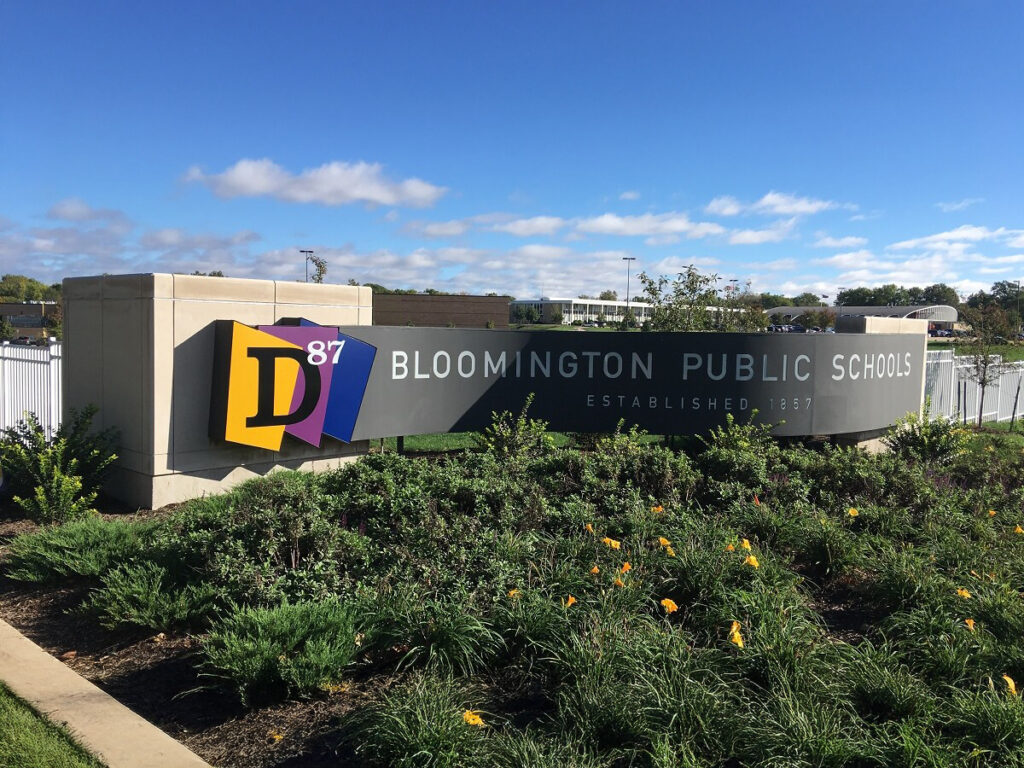
To find out, we spoke with Ashley Schnittker, retired associate director of special education, and Natalie Shumaker, director of curriculum and development, for Bloomington Public School District 87. Ashley helped to establish and grow the district’s MTSS program from 2010 until her retirement in 2025, when Natalie stepped in. Keep reading for a fascinating conversation!
Can you start out by sharing a little bit about your background, role and experience with MTSS?
Ashley
My background was special education. I was the associate director of special education, and we had been implementing MTSS for a while in our district. Around 2010, the coordinator for MTSS left, and we struggled. The director of special education, Leslie Hansen, and I knew we had to implement MTSS and keep it going because of the implications for special education, so it fell into my lap.
Natalie
My background is also in special education. I was a special ed administrator in a different district as well as an assistant principal at a high school. My first real work with MTSS was when I was the assistant principal at that high school. Then this summer I started July 1 with District 87 as the Director of Curriculum and Development. This is a general education role, and MTSS in the district has now shifted out of special education and into gen ed, which is where Ashley and I both agree it should belong – in general education with special education support.
Ashley, what were those early days of MTSS like for you?
Ashley
We definitely struggled! Initially we had a manual in place, but the manual was very basic and didn’t offer a lot of guidance. We had teams doing all kinds of individual things all over the district, but we knew we had to bring all of that together and get some consistency from building to building. Our first goal was to create a more complete manual that would be our road map for more consistently implementing MTSS. We worked with two consultants, created the manual and had our teams review it.
Then we were ready for implementation of the new manual, and COVID happened! But we went ahead and rolled it out and implemented the guidelines, processes and procedures. We purchased a software license that was really helpful (Educlimber, a data dashboard which holds multiple measures of student data and allows for collaborative decision making). We built that software to mirror the processes outlined in the manual. I spent a lot of time getting that Educlimber software up and running, making sure the processes we had written were reflected in the data and how that data was collected. It was not an easy lift, but by the time Leslie and I retired, we felt that we had a good team together and good processes in place that we could hand off to someone else.
Natalie, what has your focus been for your first semester in the role?
Natalie
I’ve been spending the fall semester really getting to know the manual. Ashley left a thorough manual of all the steps, documents and team members, and who should be doing what. I’ve been getting familiar with that and meeting all the people who are working through these things.
At our elementary schools they already have very solid procedures and practices. So at that level, my focus is reminding people of what the plan is, reminding them of the steps and making sure that we’re implementing with fidelity.
As I continue to support elementary, I’m also working on building the MTSS framework into the junior high and high school. I’ve found that our junior high has everything in place – interventions, teams and so on – but we’ve been working on making it more systematic and manageable for teachers. Next, we’ll be diving into the high school, where the focus is on what kind of interventions can be credit bearing and offer systematic support to students, as well.
Ashley
I should add – before Natalie came on board, we started with K-5 because they already had a foundation in MTSS. We’ve had several starts and stops at the junior high and high school levels because implementation is so different and we’ve had administrative turnover at the junior high, in particular. Since Natalie has experience as a high school assistant principal, she can speak their language better and bring fresh ideas. So I think we handed our MTSS over to the right person at the right time!
Can you say more about the differences in implementation at middle and high school versus elementary?
Natalie
At our middle school the administration is very supportive of MTSS, so we’re making good progress. The principal came from an elementary school, so she has a good MTSS framework, and the associate principal has a special ed background, which is very helpful in MTSS conversations.
Still, junior high and high school are very different from elementary because you have teams of teachers working with each student, so you don’t have a single teacher with the student all day. At those levels, you might have a student doing really well in one subject but struggling in another, so not all the teachers will understand the need for interventions.
At the high school level that disconnection can be even more pronounced because the teachers are content specialists who only see the student for maybe 50 minutes a day, which can cause disconnection from the “whole child” perspective that informs MTSS.
The time constraints also get more challenging for older students. Most of our students who are struggling in high school are also behind on credits, so pulling them for interventions removes them from a classroom where they’re needing to earn credits. Being able to build courses that count as elective credits while also offering interventions is really helpful.
What are some things you’ve put in place to make your MTSS sustainable for the long term?
Natalie
In District 87 all our teams, even at the high school, now write Tier 1 plans. They look at all their students as a group, either by department at the high school or by grade levels at younger ages, and they plan specifically for Tier 1.
A lot of times, I think when people implement MTSS they begin with Tiers 2 and 3, assuming that Tier 1 is already solid, but that isn’t necessarily the case. So our district’s focus on Tier 1 is very important. When I was in special Ed, we often used the phrase, “that sounds like a Tier 1 problem.” Now an important part of my job is to dig into the Tier 1 problems! Because if fifty percent of your students are below where we want them to be, individual interventions aren’t going to solve that. Instead, we’ll need to build Tier 1 supports that help every student.
Ashley
To help with sustainability and longevity, we also built in a review process to take place every year. At the end of the school year each team looks at our MTSS and makes changes as needed for the coming year. Updates might happen if state guidelines change, for example, so we built that into our process. Each year the teams take a look at what worked, what didn’t, and what we need to update. Our MTSS manual and process wasn’t ever intended to be stagnant! We knew we needed to build in review and change so we could keep our MTSS fresh even in changing circumstances.
The yearly review process sounds like a great idea! Can you think of a time when you had to make a change in your MTSS?
Ashley
For us, the most common changes were tweaking the decision guidelines for when a student received Tier 2 and Tier 3. Originally, we required a certain number of days at Tier 2 before you could implement a Tier 3 intervention, and that just didn’t work once we saw where our student data fell. We’ve also tweaked who needs to be present at certain meetings, for example, as we’ve learned more.
Natalie
Another thing added this year was more of a focus on students who internalize feelings or internalize their behaviors. So, for example, a certain number of office visits or nurse visits might trigger the start of check in/check out or some other behavior or mental health intervention.
I know MTSS is hard, ongoing work, so why is it worth it? What are the benefits you see?
Ashley
For me as a special educator, MTSS is a way to provide intervention to so many more students. Back in the days before MTSS, you had a group of students who were struggling but who didn’t qualify for services because they were left out of the discrepancy model. A good, robust MTSS reaches all students, all the way from those who are struggling to keep up to those learners who are ahead of most of their peers.
Natalie
I agree. I think the selling point to teachers is that MTSS helps all kids, even your high performing kids. At a conference I just went to, they took the MTSS pyramid and turned it on its side and made two of them. It was a continuum of your Tier 1 kids in the middle, but then your struggling students on one side and your high achieving students on the other, who both benefit from interventions.
To end the conversation, would you like to leave our readers with some words of advice?
Ashley
My main advice is that if building principals and administration don’t understand MTSS, don’t buy into it and make it a priority, then MTSS will go nowhere in a building. You need to have leaders who are involved and care about MTSS.
Natalie
I think the hard work of MTSS is that there’s no simple solution that’s going to work for everyone. You need to have the right people around the table, people who are willing to be creative, try new things and see what works, people who are passionate about education and passionate about helping kids. There are always situations that are complicated, so you have to be creative and keep tweaking. The work is never done.
Ashley
Yes – for me that’s the biggest takeaway. MTSS is an ongoing process. The work is never done, but you just keep getting better and better at it as you go.
