

Where is Special Education in an MTSS? An interview with Cindy Knight Meisner, IL MTSS-N Network Capacity Coach
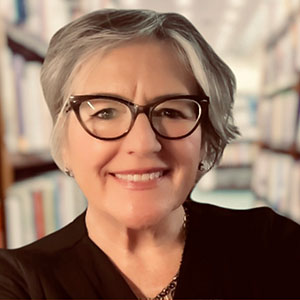
Cindy will be presenting a breakout session at our upcoming NIU Engaged Learning Conference on June 20, on the topic “Where is special education in an MTSS?” We spoke with Cindy to learn more about the connections between MTSS and special education and her plans for the session.
Learn more and register on the conference website.
Can you start out by telling us about the breakout session you’re planning for the conference?
Our focus is “Where is special education in an MTSS?” That means, where is special education within this system of lots of different kinds of supports, tailored to student needs, but first and foremost within a system? Special education is one part of it, but our work in MTSS is also about maximizing planning to support growth for all students.
One of the key takeaways I hope our audience will have is that students with disabilities are really general education students first within our planning – meaning that we’re approaching all students with a “whole student” approach, including special education students. I’m a retired director of special education, and I’ve seen how for various reasons special education can become a separate island disconnected from the other systems in the school. So part of my focus is just checking our mindset to be less categorical with labels, and more seamless in connections to the whole child and the whole school system.
Can you say more about why it’s important for special ed and general ed teachers to work together?
It’s important for adults in the schools to reach across to their counterparts who may have different skills. Special educators come to the table with lots of great knowledge and expertise on how to tailor instruction to make it more specially designed to meet the needs of students. And those are wonderful skills for all teachers to gain. Our general education teachers, on the other hand, are our core content experts who bring to the table a wealth of knowledge about curriculum and standards. Special educators need to work with these content experts so that – as much as possible given a student’s individual needs and abilities – the skills a student is learning in special education are preparing them to succeed in general education and meet subject standards.
Can you say more about students who benefit from both special education and general education settings?
Students with an IEP or in a special education program have different strengths and needs in different areas. For certain subjects or skill areas, an individual student might need intense special education interventions. But in other subject areas, the same student might be excelling. So we want the system around special education to be flexible enough that the student can get what they need: intense work with a specialized teacher or a specialized curriculum when needed, but then the student can be allowed to excel in a broader general education setting in other areas.
Who should attend the session, or who would benefit from it?
I think any teacher, pre-kindergarten through high school would benefit because we’ll be talking in broad terms that will apply at all levels. Administrators and school decision-makers will also be a really good fit for this session because the relationship between special education and MTSS influences how they allocate resources and organize their building.
Are there any myths out there about MTSS or special education that you’d like to counteract?
One of the myths is that MTSS is only for making decisions about who should be served through special education, but that’s only a small part of the MTSS. We’re always prevention-focused, so through the process of MTSS we’re looking for what works for a student to help them progress. If we find that early in the process in tier one or tier two, we might not need to formalize their intervention with a label or a specific program. Certainly, students with a disability are legally and ethically entitled to services. But the myth that MTSS is only pathway to a special education program is truly not what it’s intended for.
Another myth some people have is that MTSS is a way to delay or deny special education services – and that is not the case! When a student truly needs more intense interventions after we’ve explored other options, they will absolutely be provided. The MTSS process is the most structured and consistent way to find the tier of support that’s needed for each student in each area.
Can you say more about problem solving in MTSS?
The wonderful thing about MTSS is that the problem solving never ends. We use data – indicators of success, assessments and personal skills – to understand the whole student. We do that not only at the beginning, but throughout a students’ education.
People often know that there’s problem solving in the beginning steps, where we’re determining: what is the area of need? What are skills in which the student is falling behind or not showing growth? Then, believe it or not, in some special education situations, that problem solving can drop off. There can be an assumption sometimes that, once a student has been identified as eligible for special education services, the problem-solving has ended. It’s just very important that we remember to be intentional about using consistent and reliable processes to continuously look for ways to improve outcomes at every level, for every student. That’s really at the heart of MTSS. So, I want our audience to think very critically about that assumption because special education is not an endpoint. Identification for special education is only one step in a process that continues until a student graduates.
I’m intrigued that you said special education is not the endpoint! So what is the endpoint then?
The endpoint is having students continue to grow throughout their time in our schools, and that once they leave us, graduate and move on to the next phase of life, they have the skills they need to be successful and happy. MTSS is about promoting growth for all students. It’s helpful in reminding us to consider the whole child and to constantly re-evaluate and problem solve because each student is constantly evolving. MTSS never really ends – it’s a continuous process until students leave our services.
Are there any parting thoughts you’d like to leave us with?
I’m passionate about this subject! As I was gathering my thoughts for this conversation and the breakout session I’m planning, it took me back to why I got into this work in the first place – which is helping students, focusing on the whole student, without stigmatizing. If we can focus on the whole student – strengths as well as needs – I think we can get back in touch with things that will revive us a little bit because it’s hard work our educators do. Too many parts of the job are very challenging these days, but reconnecting with that “why” can help. We believe in all kids. We believe that everybody can learn, and that what we do makes a difference to help them get there.

Learn more about the June 20, 2025, NIU Engaged Learning Conference! Check out the conference session website for details about Cindy’s breakout session, and the other MTSS and STEAM-focused sessions.
